


Why Your Muscle Stay Tight: How Cupping, Manual Therapy, and Assisted Stretching Can Help

Tight muscles can make simple things feel harder than they should. Everyday tasks like turning your head while driving, reaching overhead, getting out of a chair, or relaxing at the end of the day can all feel limited when your body is holding tension.
Muscle tightness is common, but understanding why it happens can help you choose the right approach to managing it. Sometimes it comes from hard training. Sometimes it builds from sitting, stress, old injuries, repetitive work, or moving the same way every day. The good news is that tightness often responds well to the right mix of hands-on care and guided movement.
At Performance Health in West Chester, Ohio, we offer several hands-on treatment options, including cupping, manual therapy, and our new one-on-one assisted stretch sessions.
Cupping, manual therapy, and one-on-one assisted stretching can each play a role in helping muscles feel less guarded, improving range of motion, and supporting better movement patterns. Each treatment offers a different way to address discomfort, mobility limitations, and muscular tension.

Why muscles feel tight
Muscle tightness is not always just a “short muscle”; It can come from several overlapping factors.
One common reason is protective tension. When the nervous system senses strain, irritation, or threat, it may limit motion by increasing muscle tone. This can happen after an injury, after a hard workout, or when a joint does not feel stable.
Another reason is repetitive posture. Sitting for long hours can leave hip flexors, lower back muscles, chest muscles, and neck muscles feeling stiff. Over time, the body adapts to the positions it spends the most time in.
Muscles can also feel tight from:
Overuse from exercise, work, or daily tasks
Poor recovery after training
Stress and shallow breathing
Dehydration or low movement throughout the day
Limited joint mobility
Scar tissue or tissue sensitivity after past injuries
Weakness in nearby muscles, which makes other muscles work harder
Muscle strains or previous injuries
Tightness can be local, like a knot between the shoulder blades. It can also feel more global, like full-body tension after a stressful week.
Feeling tight doesn't always mean a muscle is physically shortened. A muscle may feel tight because it is fatigued, sensitive, or being used repeatedly without enough variation in movement.
Common symptoms of muscular tightness
Muscular tightness can show up in different ways. It is not always sharp pain. Many people describe it as a dull, pulling, heavy, or restricted feeling.
Common symptoms include:
Stiffness when getting up after sitting
Reduced range of motion
Muscle soreness or tenderness
A pulling sensation during movement
Frequent “knots” or trigger point discomfort
Tension headaches related to neck and shoulder tightness
Low back or hip tightness after sitting or exercise
A feeling that stretching helps, but only for a short time
Muscle fatigue during normal activity
Difficulty bending or rotating
Tight muscles may also change how the body moves. For example, tight hips can affect how the low back feels. Tight calves can change walking or running mechanics. Tight chest muscles can contribute to rounded shoulders and upper back tension.
That is why care often works best when it looks beyond one sore spot and considers the full movement pattern.
What cupping therapy is and how it can help
Cupping therapy uses cups placed on the skin to create suction. The cups may stay in one place or glide across the tissue with lotion. The suction gently lifts the skin and underlying tissue rather than pressing down into it.
Many patients choose cupping because it can help reduce the feeling of muscle restriction. It may also support circulation in the treated area and help the nervous system relax muscle tone.
Cupping is often used for:
Neck and shoulder tension
Upper back tightness
Low back stiffness
Hip and glute tension
Recovery from intense training
General muscle soreness
Patients often describe cupping as a pulling or pressure sensation. It should not feel sharp or unbearable. It can leave temporary circular marks on the skin. These marks aren't bruises like impact bruises, but they can look similar and usually fade over several days.
Cupping does not “pull toxins” from the body, which is a common claim that is not well supported. A more accurate way to understand it is this: cupping may help change tissue sensitivity, improve local blood flow, and create a strong sensory input that helps the nervous system let go of guarding.
For many people, it is a useful tool when muscles feel stuck, heavy, or hard to release with stretching alone.
What manual therapy is and why it matters
Manual therapy is a broad term for hands-on treatment used to assess and treat muscles, fascia, joints, and soft tissue. It may include massage techniques, joint mobilization, trigger point work, myofascial release, or targeted soft tissue treatment.
The goal is not just to “rub where it hurts.” Good manual therapy looks at how the area moves, what tissues are sensitive, and what may be contributing to the tension.
Manual therapy can help by:
Reducing muscle guarding
Improving joint motion
Calming irritated soft tissue
Decreasing sensitivity in tight areas
Preparing the body for better movement
Helping patients feel where they are restricted
For example, a patient experiencing neck stiffness may benefit from manual technique that improve comfort when turning their head. Someone experiencing hip stiffness may benefit from hands-on treatment that makes it easier to participate in strengthening and mobility exercises.
Manual therapy can create a window of opportunity. The body often moves more freely right after treatment. That is the ideal time to add active movement, mobility drills, or assisted stretching so the improvement becomes more useful.

Introducing our one-on-one assisted stretch sessions
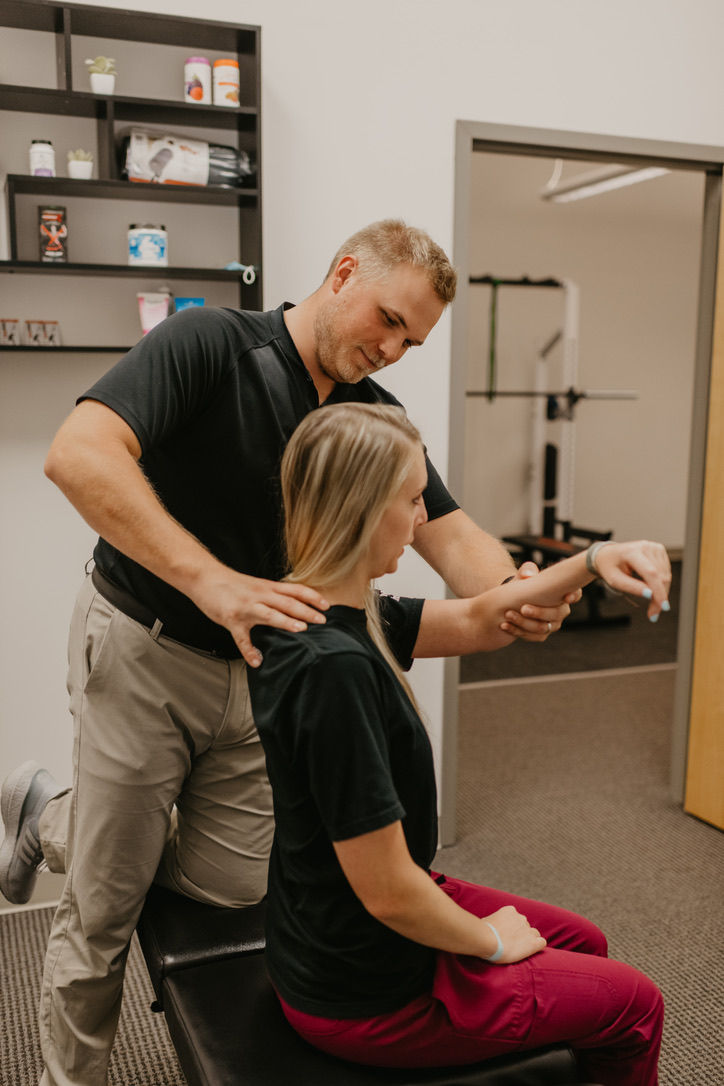
At Performance Health, we're excited to offer our new one-on-one assisted stretch sessions designed to help patients improve flexibility, mobility, and overall movement comfort.
Unlike a traditional stretching routine performed independently, assisted stretching allows a trained provider to guide movements, adjust positioning, and respond to how your body feels in real time. That means the stretch can be more specific, more comfortable, and more effective for the area being addressed.
Sessions may include:
Active Release Techniques
ART focuses on treating soft tissue restrictions while the muscle moves through a specific range. It can be helpful when a muscle feels tight during activity or when tissue feels stuck with motion.
Muscle Energy Technique
MET uses gentle muscle contractions followed by relaxation and movement into a new range. This approach can help improve mobility while keeping the patient actively involved.
Post-Isometric Relaxation
PIR uses a light contraction before a stretch. After the contraction, the muscle may relax enough to allow a more comfortable range of motion.
Myofascial release
Myofascial release focuses on the fascia and soft tissue layers that can contribute to stiffness, pulling, or restricted movement. It is often slower and more sustained than traditional massage.
Each session is tailored to the person on the table. A runner with tight calves needs a different approach than someone with desk-related neck tension. A golfer with limited rotation needs different work than someone feeling stiff after strength training.
Who can benefit from assisted stretching
Assisted stretching can be helpful for many people, not only athletes. It can support anyone who feels limited by stiffness, poor mobility, or recurring muscle tension.
Good candidates may include:
Desk Workers: People who experience hip, neck, and shoulder stiffness after prolonged sitting.
Standing Workers: Individuals who experience muscular fatigue or stiffness after spending long periods on their feet.
Weekend Warriors: Active adults who want to maintain mobility for golf, running, hiking, or recreational sports.
Athletes: Individuals looking to incorporate guided mobility work into their training and recovery routines.
Active Adults: People who want to feel more comfortable during everyday movements.
Assisted stretching isn't appropriate for every injury or condition. Patients experiencing acute injuries, unexplained pain, or certain medical conditions may need an evaluation before participating.
The goal is to create change without forcing the body into a protective response.
Why we combine hands-on treatment with movement
At Performance Health, we recognize that reducing muscular discomfort is only one part of improving physical function. That's why we also emphasize rehabilitation and movement training.
Hands-on treatment can help reduce tension, but movement teaches the body how to use the new range. That is why our DNS-based rehabilitation approach focuses on breathing, stabilization, and coordinated movement.
This matters because tightness often returns when the body does not know how to control the new range. Movement helps reinforce the result, which helps patients work toward maintaining mobility during the activities that matter most to them.
Feel Better. Move Better. Stay Active.
Tight muscles are rarely solved by one stretch or one technique. They often need a mix of soft tissue care, nervous system calming, mobility work, and active movement.
Whether you're experiencing muscular tightness from work, recovering from physical activity, or looking for a guided mobility session, Performance Health offers several options to help you move more comfortably.
When these tools are combined thoughtfully, tight muscles often become less reactive, movement feels smoother, and everyday activity feels easier. If body tension keeps coming back, a one-on-one approach can help identify what your body needs and build a plan that goes beyond short-term relief.
Ask us about our new 15-minute upper or lower body, or 30-minute full body one-on-one stretch sessions.


Comments