


Dry Needling vs Acupuncture in West Chester OH Which Treatment Is Right for You

If you've ever heard someone mention dry needling or acupuncture, you may have wondered whether they're the same treatment.
Both involve placing thin, sterile needles into specific areas of the body, but the reasoning behind each technique and the conditions treated are different. That is where many people get confused about dry needling vs acupuncture. Both treatments use fine, sterile needles. Both may help with pain and movement. But they come from different clinical traditions, use different assessment methods, and are often chosen for different goals.
For someone dealing with neck tightness, low back pain, headaches, shoulder irritation, hip pain, or sports-related aches, the right option is not always obvious. The best choice depends on the symptoms, exam findings, medical history, and how the treatment fits into a larger rehab plan.
This guide explains what dry needling and acupuncture are, what each may feel like, how they may help, and how they can be paired with DNS rehab for better movement and long-term results.

What is dry needling
Dry needling is a treatment used by trained healthcare providers, often physical therapists, chiropractors, or other licensed clinicians depending on state law and scope of practice. It targets irritated muscles, trigger points, and areas of neuromuscular tension.
The word “dry” simply means no medication or fluid is injected. The needle is solid and very thin. The goal is usually to affect the muscle, local nerves, and surrounding tissue so the area can relax, move better, and tolerate rehab more easily.
Dry needling is often used for:
Tight bands of muscle that do not release with stretching alone
Trigger points that refer pain to another area
Neck and shoulder tension
Low back or hip tightness
Rotator cuff or shoulder pain related to muscle guarding
Knee, calf, or foot issues tied to overuse
Sports injuries where muscle tone is limiting movement
A clinician usually chooses treatment points based on a physical exam. They may check range of motion, tenderness, strength, posture, breathing mechanics, joint movement, and how symptoms change with specific positions.
Dry needling is often most helpful when it is part of a rehab plan, not when it is used as a stand-alone fix. If a muscle keeps tightening because of poor movement strategy, weakness, joint restriction, or breathing dysfunction, needling may calm the area down, but rehab helps teach the body what to do next.
What dry needling may feel like
Dry needling can feel different from person to person. Some people barely feel the needle enter the skin. Others feel pressure, a deep ache, or a quick muscle twitch.
A local twitch response is common when the needle contacts a sensitive trigger point. It may feel like the muscle jumps for a second. That response can be surprising, but it is usually brief.
Common sensations include:
A small pinch at the skin
Dull pressure or aching in the muscle
A quick twitch or cramp-like feeling
Mild soreness later that day or the next day
A looser or lighter feeling after treatment
Some people compare the after-feeling to post-workout soreness. The area may feel tender for a short time, especially if several trigger points were treated.
After dry needling, clinicians often recommend gentle movement, hydration, and avoiding intense training for a short period if soreness is present. The exact advice depends on the area treated and the patient’s condition.
What is acupuncture
Acupuncture is a treatment rooted in traditional Chinese medicine and also used in modern integrative healthcare. Traditonal acupuncture uses specific points along pathways known as meridians. Moder acupuncture may also be explained through its effect on sensory nerves, pain processing, and other physiological responses.
Acupuncture is used for a variety of concerns, with evidence supporting its use for some pain conditions more strongly than others.
Acupuncture is not limited to one sore muscle or trigger point. A session may include points near the area of pain and points farther away, such as the hands, feet, legs, or ears.
Many people seek acupuncture for pain, but it is also used to help manage broader symptoms. Research and clinical use suggest acupuncture may support symptom management for:
Neck pain and back pain
Osteoarthritis-related discomfort
Tension-type headaches and migraines
Stress-related muscle tension
Nausea in certain settings
Sleep difficulty related to pain or stress
Menstrual discomfort
Jaw tension or TMJ-related symptoms
General pain sensitivity
Acupuncture does not replace medical care for serious or unexplained symptoms. It may serve as a conservative option or a complementary treatment when used by a licensed provider and coordinated with the rest of a patient’s care.
How dry needling and acupuncture are different
The easiest way to understand the difference is to look at the intent behind the needle.
Dry needling | Acupuncture |
Often targets muscles, trigger points, and neuromuscular tension | Often targets acupuncture points based on traditional or integrative assessment |
Commonly used for musculoskeletal pain and movement restriction | Used for pain and a wider range of symptom management |
Point selection is usually based on orthopedic and movement exam findings | Point selection may be based on meridians, symptom patterns, and whole-body assessment |
Often paired directly with rehab exercises | May be used as a stand-alone therapy or alongside other care |
Sensation may include a muscle twitch or deep ache | Sensation is often lighter, dull, heavy, warm, or calming |
Both approaches use sterile, single-use needles. Both should be performed by a trained, licensed professional. Both can help reduce pain for some patients, but neither is a magic cure.
The bigger question is not which one is “better.” The better question is: What problem are we trying to solve?
How these treatments may benefit patients
Needling therapies may help patients by reducing pain, calming irritated tissue, and making movement feel easier. When pain drops, people often move with less guarding. That can create a useful window for rehab.
Possible benefits may include:
Less muscle tension
Improved range of motion
Short-term pain relief
Better tolerance to exercise
Reduced sensitivity in painful areas
Improved awareness of how the body is holding tension
The key is what happens next. If someone receives dry needling for chronic shoulder tightness, then goes back to the same movement pattern that caused the tightness, symptoms may return. If the treatment is followed by breathing work, shoulder blade control, trunk stability, and strength training, the body has a better chance to keep the change.
That is why needling often works best as part of a larger plan.
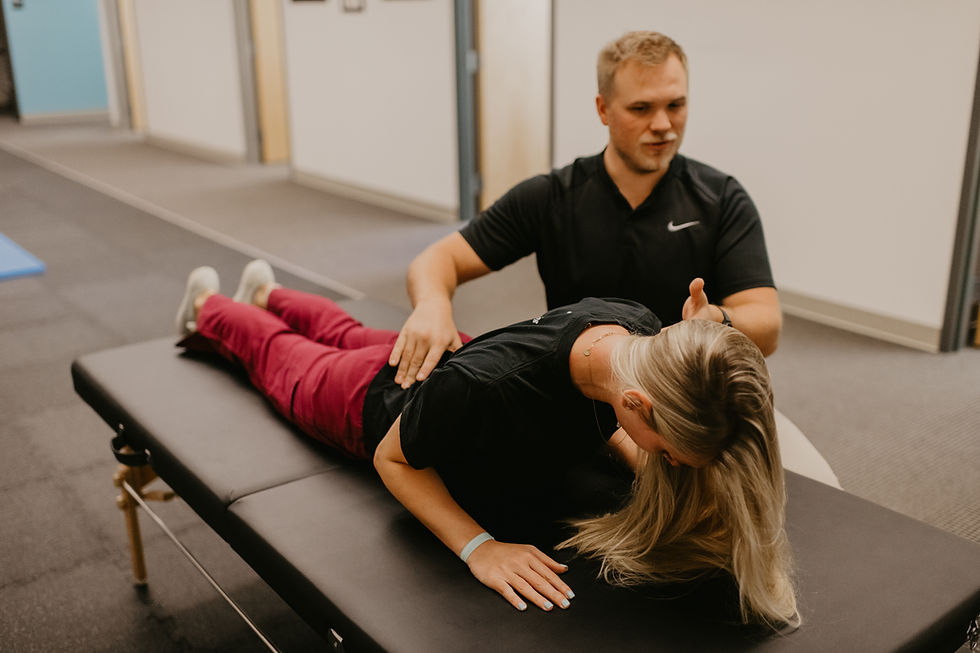
How we combine needling with DNS rehab
DNS stands for Dynamic Neuromuscular Stabilization. It is a rehab approach based on developmental movement patterns, breathing mechanics, joint centration, and reflexive core stability.
In simpler terms, DNS looks at how the body stabilizes itself during movement. Many pain problems are not only about a tight muscle. They may involve how the ribs, pelvis, spine, hips, shoulders, and feet coordinate together.
At Performance Health in West Chester, OH, dry needling or acupuncture-style treatment may be used to help calm symptoms so DNS rehab can be more effective. The order may look something like this:
Assess movement, pain, breathing, and strength
Use dry needling or acupuncture when appropriate
Re-test movement to see what changed
Add DNS-based exercises to teach better control
Progress into sport, work, lifting, or daily activity patterns
For example, someone with low back tightness may feel temporary relief after needling. DNS rehab then focuses on breathing, rib and pelvis position, hip control, and trunk stability. The goal is to help the nervous system choose a better strategy instead of returning to the same protective tightness.
For an athlete, needling may reduce calf or hip guarding. DNS and strength work then help restore running mechanics, jumping control, or rotational power.
How to know which treatment is right for you
Dry needling may be a better fit when the main issue appears to be muscle trigger points, local tightness, sports-related overuse, or movement restriction linked to specific muscles.
Acupuncture may be a better fit when symptoms are more widespread, stress-related, chronic, or connected to issues like headaches, sleep disruption, nausea, or general pain sensitivity.
A combined approach may make sense when pain has both local and system-wide features. For example, a person may have a specific tight neck muscle but also frequent headaches and high stress. In that case, the provider may choose a plan that addresses both the local tissue and the broader pattern.
A good evaluation should answer these questions:
What is driving the pain or tension?
Is the issue local, whole-body, or both?
Are there medical red flags that need referral?
Will needling help the person participate in rehab?
What exercises will help the results last?
If a provider cannot explain why they are choosing one method over the other, ask.
What risks should you know about
Dry needling and acupuncture are generally considered safe when performed by properly trained providers using clean technique and sterile, single-use needles. Still, all treatments have risks.
Possible side effects include:
Temporary soreness
Minor bleeding or bruising
Lightheadedness
Fatigue after treatment
Temporary symptom flare
Rare infection risk
Rare injury to deeper structures if performed improperly
Certain people need extra caution. Tell your provider if you are pregnant, take blood thinners, have a bleeding disorder, have a compromised immune system, have a history of fainting with needles, or have a serious medical condition.
Seek medical care for unexplained weakness, loss of bladder or bowel control, fever, major injury, severe night pain, chest pain, or symptoms that do not fit a typical muscle or joint problem.
The right treatment should fit the bigger plan
Dry needling and acupuncture can both be useful, but they are not the same treatment. Dry needling often focuses on muscles, trigger points, and movement limits. Acupuncture can address pain and a wider range of symptoms through a different assessment and treatment model.
For many patients in West Chester, OH, Mason, Liberty Township, and the Cincinnati area, the best results come from matching the treatment to the person, then combining it with smart rehab. Needling may help calm the system. DNS rehab helps teach the body how to move, stabilize, and recover with more control.
The right choice starts with a clear evaluation, a safe treatment plan, and a focus on lasting function, not just short-term relief.


Comments