


Dowagers Hump: Understanding Upper-Back Kyphosis, Posture, and Spinal Changes

A rounded area at the base of the neck can feel confusing. It may seem like a posture issue at first, especially if the shoulders look more rounded or the head sits farther forward than it used to. But a “Dowager’s hump” is not always caused by slouching alone.
That visible curve can come from several overlapping factors, including muscle imbalance, stiffness in the thoracic spine, age-related joint and disc changes, osteoporosis-related vertebral compression, or increased upper-back kyphosis.
The key point is simple: the cause matters. A flexible posture-related curve is not the same as a structural spinal change, and each one needs a different approach.

What people mean by a Dowager’s hump
“Dowager’s hump” is a non-medical term. People usually use it to describe a noticeable rounding where the lower neck meets the upper back. That area includes the lower cervical spine and upper thoracic spine.
A normal spine is not straight. The thoracic spine, which runs through the upper and mid back, naturally curves outward. This curve is called thoracic kyphosis. Some kyphosis is healthy and necessary.
The concern is when the curve becomes excessive, painful, stiff, or linked with changes in balance and movement. This is often called thoracic hyperkyphosis, which means the normal forward curve of the upper back has increased beyond what is expected.
A Dowager’s hump may involve:
A rounded upper back
Forward head posture
Shoulders that roll forward
Tightness across the chest
Stiffness between the shoulder blades
Trouble standing fully upright
Neck or upper-back discomfort
The appearance alone does not prove that someone has a spinal deformity. Some people have a soft tissue prominence, postural rounding, or muscle changes without major structural spinal changes. Others may have vertebral wedging or compression fractures that need medical attention.
Common causes of a Dowager’s hump
Upper-back rounding often develops from more than one factor. Posture, mobility, strength, bone health, and spinal structure can all play a role.
Possible contributor | What it can do |
Prolonged forward posture | Trains the neck, shoulders, and upper back to rest in a rounded position |
Thoracic stiffness | Makes it harder to extend through the upper back |
Muscle imbalance | Weakens upright support and increases strain on the neck |
Degenerative spinal changes | Reduces motion in joints and discs over time |
Osteoporosis and compression fractures | Can change the shape of the vertebrae |
Scheuermann’s kyphosis | Creates a more structural curve that often begins earlier in life |
Postural changes
Prolonged positioning with the head and shoulders forward can influence muscle endurance and movement patterns
Thoracic Hyperkyphosis
Increased thoracic curvature can alter the position of the shoulders, shoulder blades, neck, and rib cage.
This may make it more difficult to achieve and maintain an upright posture.
Hyperkyphosis can be flexible, structural, or a mix of both. A flexible curve may improve with movement and strengthening. A structural curve may not fully correct, but treatment can still help comfort, function, and mobility.

Degenerative changes
As people age, the discs and small joints of the spine can change. Discs may lose height. Joints may become stiffer. Ligaments can become less elastic. These changes can reduce spinal mobility and make upright posture harder to maintain.
Degenerative changes do not always cause pain. Many people have age-related findings on imaging without major symptoms. Still, when these changes combine with low muscle endurance, reduced activity, or bone loss, the upper back may gradually become more rounded.
Osteoporosis and vertebral compression fractures
Bone health is an important part of this conversation. Osteoporosis makes bones more fragile. In the spine, this can raise the risk of compression fractures, where a vertebra loses height and becomes wedge-shaped. A compression fracture can cause the front portion of a vertebral body to collapse, increasing the forward curvature of the thoracic spine.
Multiple compression fractures can lead to a progressively rounded upper back.
Possible signs that need medical evaluation include:
Sudden mid-back or upper-back pain
Pain after a fall or sudden movement
Loss of height over time
A curve that seems to worsen quickly
Pain that does not improve with rest
New weakness, numbness, or walking difficulty
Compression fractures need proper diagnosis. Treatment may include pain management, activity guidance, bracing in some cases, bone health evaluation, and fall-risk reduction.
Scheuermann’s kyphosis
Scheuermann’s kyphosis is a structural spinal condition that usually develops during adolescence. It involves wedge-shaped vertebrae that create a more fixed thoracic curve.
Some people do not notice it until adulthood, especially if symptoms were mild earlier in life. Unlike a purely postural curve, this type of kyphosis may not fully straighten with effort. Care often focuses on pain control, strength, mobility, and monitoring when needed.
Symptoms that can come with upper-back kyphosis
A Dowager’s hump may be mainly cosmetic for some people. For others, it affects comfort, breathing mechanics, balance, or daily activity.
Common symptoms include:
Aching or tightness in the upper back
Neck pain or fatigue
Shoulder tension
Reduced ability to rotate or extend the upper back
Difficulty standing tall for long periods
Feeling stiff after sitting
Reduced shoulder range of motion
Headaches related to neck tension
Balance changes, especially when the head sits far forward
More advanced upper-back kyphosis can shift the body’s center of mass forward. That can make walking, reaching, and looking straight ahead more tiring.
Pain is not always proportional to the visible curve. A person with a small curve may have significant discomfort due to muscle guarding or stiffness. Someone with a larger curve may have little pain but more functional limitation.
How Can a Dowager's Hump Affect the Rest of the Body?
The Upper back doesn't work independently. The thoracic spine connects the cervical spine, rib cage, shoulder blades, lumbar spine, and pelvis. Changes in one area can influence movement elsewhere.
The Neck
As the thoracic spine becomes more rounded, some people compensate by moving their head forward and extending the upper cervical spien to keep their eyes level.
This can increase demands on the:
Suboccipital muscles
Cervical extensors
Upper trapezius
Levator scapulae
This may contribute to:
Neck stiffness
Headaches
Shoulder tension
Neck fatigue
The Shoulders
Thoracic kyphosis can influence scapular position and movement. The shoulder blades may become more protracted or anteriorly tilted, which can affect overhead movement. This can change the demands placed on the rotator cuff and scapular stabilizers.
The Rib Cage and Breathing
The ribs attach directly to the thoracic spine. Significant changes in thoracic curvature can therefore affect rib cage movement. For some people, reduced thoracic mobility may make it more difficult to achieve normal rib cage expansion during breathing.
The Low Back
The lumbar spine may compensate for changes in the thoracic region.
For example, someone with increased thoracic flexion may increase lumbar extension in an effort to maintain an upright position. This doesn't mean a Dowager's hump automatically causes low-back pain. It demonstrates why the spine should be evaluated as a connected system.
Why Does Early Treatment Matter?
The earlier you indentify a movement or mobility problem, the more opportunity you have to addres factors such as:
Thoracic mobility
Cervical mobility
Muscle strength
Postural endurance
Scapular control
Balance
Breathing mechanics
Early evaluation is also important because a progressive upper-back curve can sometimes indicate an underlying structural issue.
If osteoporosis or vertebral compression fractures are involved, simply stretching the chest and strengthening the back may not address the underlying problem.
A clinician may assess:
Posture in standing and sitting
Spinal mobility
Neck and shoulder range of motion
Strength and endurance of the upper back
Balance and walking
Pain pattern and symptom history
History of falls, fractures, or osteoporosis
Changes in height
Nerve symptoms, such as numbness or weakness
Imaging is not always needed for mild, flexible posture changes. It may be recommended when there is trauma, severe pain, rapid change, suspected fracture, nerve symptoms, or concern for a structural condition.
Bone density testing may also be discussed when osteoporosis is a concern, especially after a low-impact fracture or noticeable height loss.

Treatment options for Dowager’s hump and upper-back kyphosis
Treatment depends on the cause. The best plan often combines education, movement, strengthening, and medical care when needed.
Posture and movement retraining
For flexible posture-related rounding, small daily changes can help. The goal is not to force a rigid “perfect posture.” The goal is to build more options for movement and reduce the time spent in one position.
Helpful strategies may include:
Changing positions often during the day
Raising reading material or screens closer to eye level when possible
Taking short standing or walking breaks
Practicing gentle upright alignment without straining
Reducing long periods of unsupported forward bending
Posture should feel active but not exhausting. Painful bracing often makes symptoms worse.
Thoracic mobility exercises
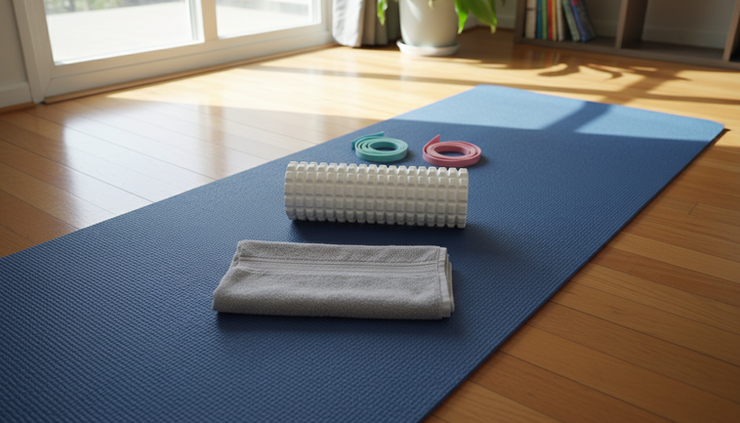
When the upper back is stiff, mobility work may help restore extension and rotation. Common examples include gentle thoracic extension over a foam roller, open-book rotations, cat-cow movements, and supported chest-opening positions.
These should feel controlled, not aggressive. People with osteoporosis, known compression fractures, or severe pain should ask a clinician before doing loaded or end-range spinal movements.
Strengthening the upper back
Strength work is often central to treatment. The muscles around the shoulder blades, spine, and back of the shoulders help support a more upright position.
At Performance Health we utilize DNS-based movement. DNS can be incorporated to address the relationship between breathing, rib cage position, spinal stability, and movement.
This approach focuses on developing better control rather than forcing the body into a rigid "perfect posture."
Strength changes take time. The goal is endurance for daily life, not just a short burst of effort.
Chest and neck flexibility
Tightness in the chest and front of the shoulders can contribute to rounded posture. Gentle stretching of the pectoral muscles may make it easier to bring the shoulders back without strain.
Neck mobility may also matter, especially when forward head posture is present. Stretching should not cause sharp pain, numbness, dizziness, or symptoms down the arm.
What to avoid when trying to fix a Dowager’s hump
Many people try to “pull the shoulders back” all day. That usually does not work well. It can create neck tension and fatigue without changing the underlying cause.
Be cautious with:
Forceful spinal manipulation when osteoporosis or fracture is possible
Aggressive backbends without assessment
Heavy loaded flexion if bone density is low
Painful posture braces used without guidance
Programs that promise to “reverse” all spinal curves quickly
Braces may help in select cases, but they should not replace strength and movement unless a clinician recommends them for a specific condition.
When to seek medical care
Get medical advice if the curve is painful, worsening, or affecting daily function. Prompt care is especially important when symptoms begin suddenly or follow a fall.
Seek evaluation if there is:
Sudden or severe back pain
New numbness, tingling, or weakness
Trouble walking or balance changes
A curve that is progressively increasing
A history ofrisk factors for oseoporosis
A change following a fall or other trauma
Noticeable height loss or suspected fracture
These symptoms do not mean something serious is always present, but they deserve proper assessment.
The main takeaway
A Dowager’s hump can come from posture, stiffness, muscle weakness, degenerative spinal changes, bone loss, or structural kyphosis. The rounded shape is only one clue. The real question is what is causing it and whether it is flexible, painful, progressive, or related to bone health.
The most useful next step is a thoughtful assessment. From there, treatment can target the right problem, whether that means mobility work, strengthening, posture retraining, pain care, or medical management for osteoporosis or spinal changes.
A rounded upper back is common, but it should not be ignored when it causes pain, limits movement, or changes quickly. With the right plan, many people can improve comfort, function, and confidence in daily movement.


Comments